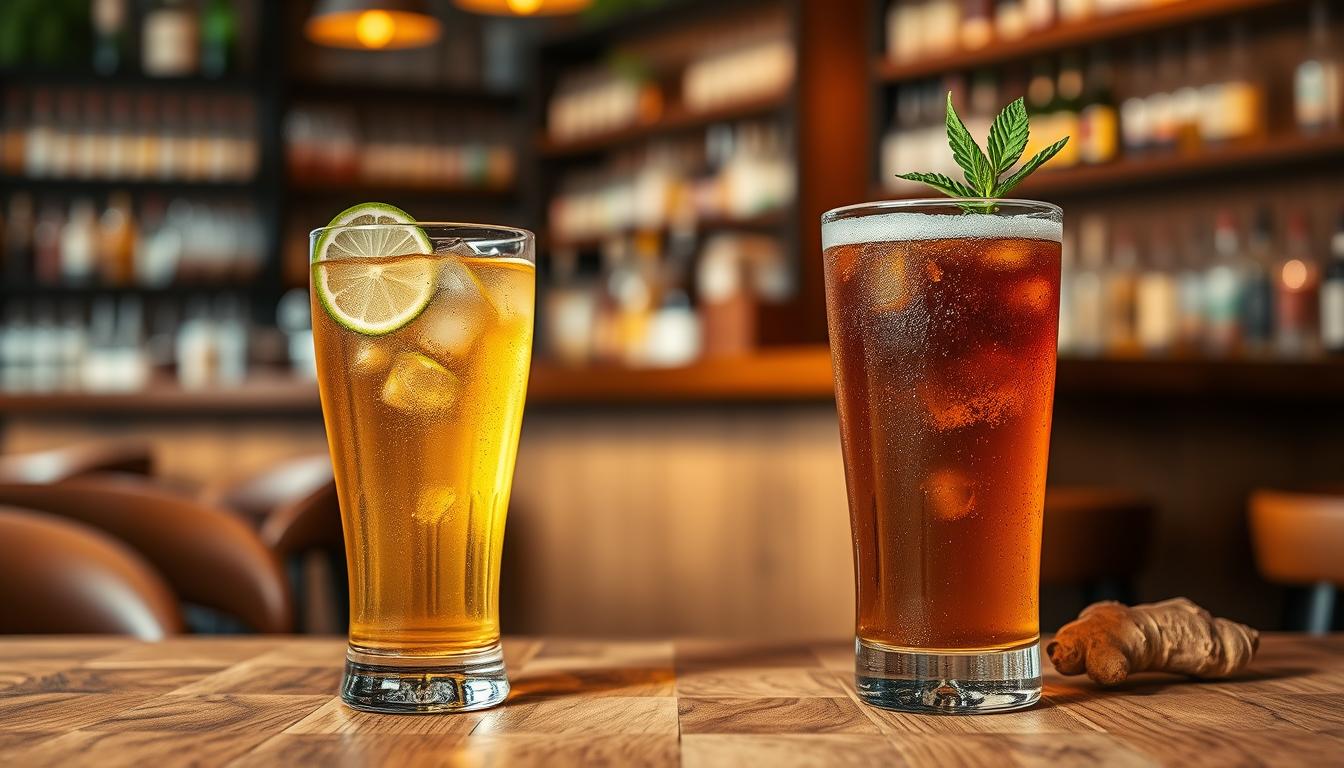
Ginger Ale vs Ginger Beer
Ginger Ale vs Ginger Beer? Most people are not aware that these two coexist and that they have unique characteristics that set them apart.
These two beverages share a common root but have evolved down distinct paths.
Their unique production methods create entirely different taste experiences.
Understanding this distinction is the key to unlocking better cocktails and more satisfying non-alcoholic options.
Choosing the right one can elevate a simple mixed drink into something extraordinary. The wrong choice might leave your cocktail tasting flat or overly sweet.
This guide will clear up the confusion and give you the confidence to choose wisely for any occasion.
So, if you have ever grabbed a bottle from the store shelf, assuming ginger ale and ginger beer were just two names for the same bubbly drink, this is the guide to read.
Key Takeaways
- Ginger beer and ginger ale are not the same beverage and have significant differences.
- The most noticeable contrast is in flavor intensity, with one being much spicier.
- They are made using completely different carbonation processes.
- Their distinct profiles make each one better suited for specific cocktails.
- Knowing which one to use will greatly improve your home bartending results.
- This knowledge helps you make informed choices both at the bar and the grocery store.
History and Origins of Ginger Beverages
Your favorite ginger drinks have a rich history that begins not in a bar, but in an apothecary.
For thousands of years, people valued the ginger root for its medicinal qualities as much as its sharp flavor.
From Medicinal Roots to Barroom Staples
This beverage’s story starts in 18th-century England. Early versions were fermented, creating a bubbly drink with a noticeable alcohol content.
By the 1800s, it was bottled and sold commercially.
Its popularity spread to the Caribbean with British colonization. Meanwhile, ginger ale emerged much later when a Detroit pharmacist created Vernor’s in 1866.
Evolution Through Prohibition and Modern Times
The temperance movement changed everything. Activists targeted the alcoholic brew, pushing producers to create a non-alcoholic alternative.
This led to the dry, crisp style famously marketed by Canada Dry.
After Prohibition, this new drink became a classic mixer for whiskey.
Today, North Americans lead global consumption of these beverages, a market worth nearly $5 billion.
Ginger Ale vs Ginger Beer: Key Differences in Process and Flavor
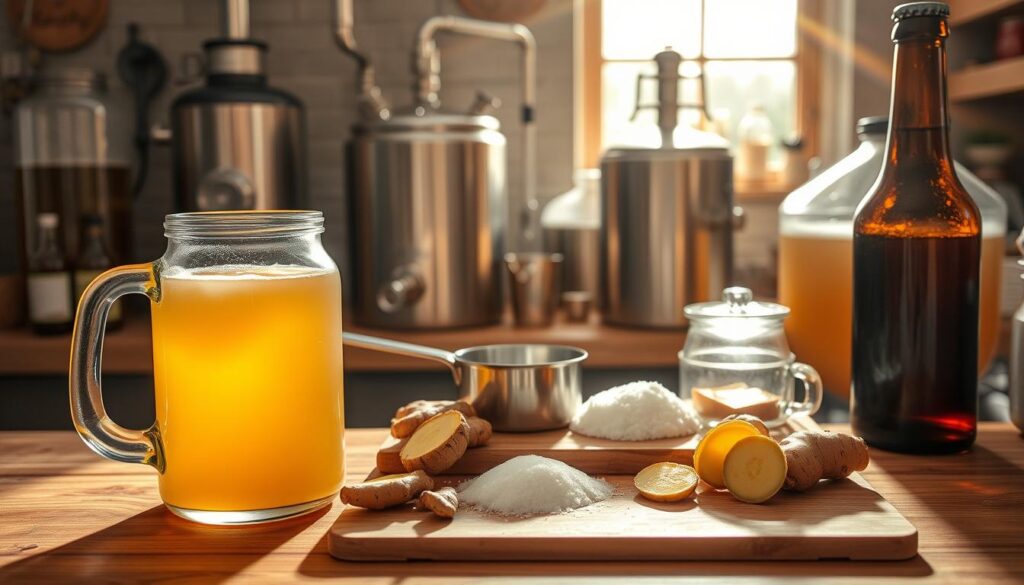
How these beverages achieve their signature fizz tells the story of their contrasting personalities. The manufacturing approach creates entirely different drinking experiences.
Fermentation vs. Artificial Carbonation
Traditional brewing relies on natural fermentation with yeast and bacteria. This method develops complex flavors over several days.
The result is a drink with authentic character.
Commercial soda production uses forced carbon dioxide injection. This creates instant bubbles but lacks depth. The simpler process yields a milder, sweeter profile.
| Characteristic | Traditional Brew | Commercial Soda | Key Difference |
|---|---|---|---|
| Production Method | Natural fermentation | CO2 injection | Time vs. instant process |
| Flavor Profile | Bold, spicy, complex | Mild, sweet, simple | Intensity and depth |
| Sugar Content | Often comparable | Often comparable | Spice masks sweetness |
| Alcohol Content | Trace amounts possible | Completely non-alcoholic | Fermentation byproduct |
Sugar Content, Spice, and Alcohol Nuances
Many people assume the sweeter-tasting option has more sugar. Surprisingly, both often contain similar amounts.
The spice level in fermented versions masks the sweetness.
Some producers enhance the spicy kick with capsaicin. This creates an intense experience not for everyone.
Always check labels for real ingredients versus artificial flavors.
Quality brands use multiple ginger varieties from different regions. They may include additional spices for complexity.
Your choice depends on whether you prefer subtlety or boldness.
Ginger in Your Cocktails and Home Brews
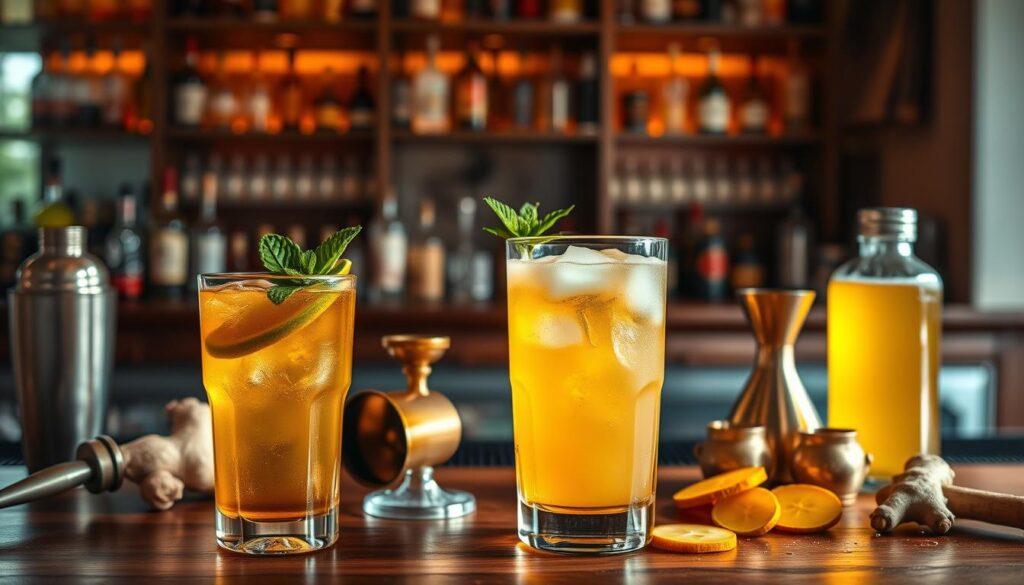
Mastering the art of ginger cocktails begins with understanding how different ginger beverages complement various spirits.
The right choice can elevate your mixed drinks from simple to spectacular.
Crafting Classic Cocktails Like Moscow Mules and Dark ‘n Stormy
Traditional mixed drinks rely on specific ingredients for authentic flavor.
The Moscow Mule showcases vodka with a spicy ginger mixer and fresh lime. This combination creates a refreshing, balanced drink.
The Dark ‘n Stormy pairs rum with the same bold mixer. Adding half an ounce of lime juice enhances the flavors beautifully.
These classic recipes demonstrate perfect harmony between spirits and mixers.
| Cocktail | Primary Spirit | Recommended Mixer | Key Flavor Notes |
|---|---|---|---|
| Moscow Mule | Vodka | Spicy Ginger Beverage | Refreshing, balanced, citrus-forward |
| Dark ‘n Stormy | Dark Rum | Bold Ginger Mixer | Rich, spicy, tropical |
| Whiskey Ginger | Bourbon | Milder Ginger Soda | Smooth, sweet, approachable |
| Kentucky Mule | Bourbon | Spicy Ginger Beverage | Bold, complex, warming |
Experimenting with Ginger in Modern Mixology
Contemporary bartenders love working with ginger’s versatility. It pairs wonderfully with whiskey’s natural spice notes.
Tropical flavors like citrus and pineapple also complement it perfectly.
Quality brands make a significant difference in your results. Fever-Tree and Q Mixers offer excellent options for home use.
Barritt’s provides a spicier alternative for bolder drinks.
Creating your own ginger syrup opens up creative possibilities.
Mix it with carbonated water for custom sodas. Homemade versions keep for about a week refrigerated.
Related: Ginger Ale Jameson Cocktails You Must Try.
The Right Ginger Mixer for your Cocktails
With this knowledge in hand, selecting the right ginger mixer becomes a simple, confident decision.
You now understand the fundamental difference between these two distinct beverages.
Choose the bold, fermented option when you want spicy character to shine through in your cocktail.
Opt for the sweeter, carbonated soda when your spirit should take center stage.
Always check labels for real ingredients rather than artificial flavors. Explore different brands to find your perfect match for any drinking occasion.
This understanding transforms your approach to mixed drinks and standalone beverages alike.
You’ll make better choices whether stocking your home bar or ordering at your favorite spot.