Decorating Techniques for Soda Cakes
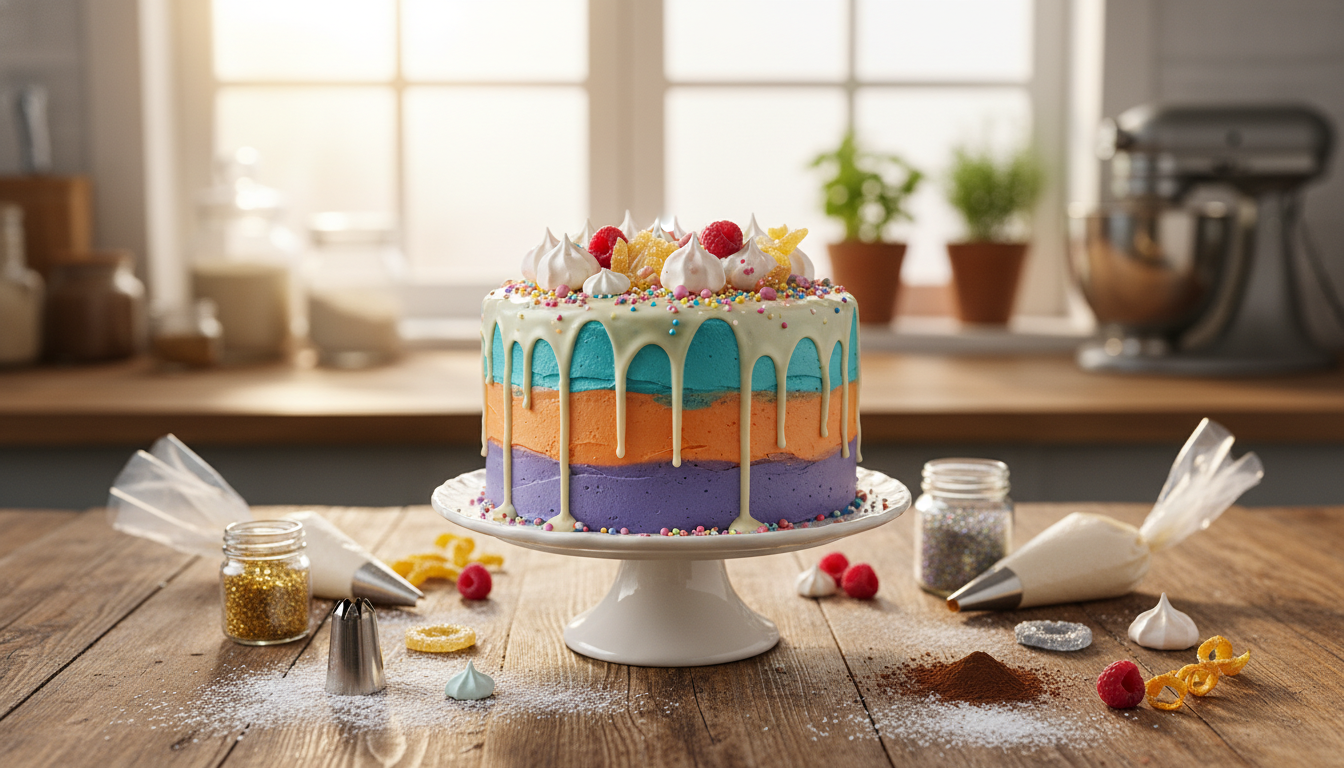
What if you could create a stunning, delicious dessert with just two simple ingredients? Well with the right decorating techniques for soda cakes you are off to the races.
The unique, airy crumb structure of a soda cake actually makes it a fantastic canvas for your creativity.
It holds frosting beautifully and offers a forgiving base for both beginners and experts.
This guide will walk you through the entire process. You’ll learn the science behind using carbonation as a leavening agent.
We will also cover the best pans to use for ideal decorating results and explore fantastic flavor combinations that will impress everyone.
The accessibility of this recipe is its greatest strength. You don’t need eggs, oil, or any special equipment.
It’s the perfect solution for a last-minute celebration or when you simply want to whip up something special without a fuss.
Ready to get started? Let’s go then!
Key Takeaways
- Soda cakes are incredibly simple to make, requiring only a box of cake mix and a can of soda.
- The unique texture of these cakes makes them an excellent base for various frosting and decorating methods.
- Understanding how carbonation works in the recipe is key to achieving the perfect moist crumb.
- Choosing the right baking pan is crucial for achieving the best shape and structure for decoration.
- This approach to baking is highly accessible, perfect for bakers of all skill levels.
- You can create impressive and customized desserts for any occasion with minimal effort.
Master Decorating Techniques for Soda Cakes
Before you pick up a piping bag, it’s essential to grasp what makes this type of dessert so special.
The foundation of any great finish is a well-understood base. Knowing how your creation behaves is the first step to beautiful results.
Understanding the Role of Soda in Cake Texture
The fizzy drink in your recipe does more than just add flavor. It fundamentally changes the texture of your final product.
This is key to choosing the right approach for your project.
Since this recipe doesn’t include eggs, the result is wonderfully moist but also more delicate.
Eggs normally bind everything together. Without them, the crumb is tender and can be a bit crumbly.
How Carbonation Acts as a Natural Leavening Agent
Carbonation is the magic behind the rise. The bubbles in the soda create tiny air pockets throughout the batter.
During baking, these pockets expand, making the cake light and airy.
Mixing your two ingredients for two minutes is crucial. This step evenly distributes the bubbles. It ensures your cake has a consistent texture from edge to center.
Always let your creation cool completely. This allows the delicate structure to set. A firm crumb means your frosting will stick perfectly for a stable, beautiful finish.
The Science Behind Soda Cakes
At the heart of this baking innovation is a clever chemical interaction that replaces multiple traditional ingredients.
Understanding this process helps you achieve consistent, delicious results every time.
Exploring the Chemistry of Cake Mix and Soda
When you combine your cake mix with soda, you’re starting a fascinating chemical reaction.
The carbonation in the drink provides immediate leavening action. CO2 bubbles get trapped throughout your batter.
During baking, these bubbles expand in the oven. This creates the light, airy texture you’d normally get from baking powder.
The acids in most sodas also react with alkaline components in your mix.
Why Binding-less Batter Still Works
Even without eggs as a binding agent, your batter holds together beautifully.
The starches and proteins in the cake mix undergo changes when heated. They gelatinize and coagulate to form a stable structure.
This simplified approach doesn’t mean compromised quality. The moisture from soda often creates an exceptionally tender crumb.
Many bakers actually prefer this texture over traditional recipes.
Timing matters when working with these ingredients. Get your mixture into the oven quickly to capture maximum carbonation.
Fresh, fizzy soda ensures the science works perfectly for your creation.
Step-by-Step Guide to Preparing Your Soda Cake
Let’s dive into the practical steps that transform basic pantry items into a delightful treat. This straightforward process ensures consistent results every time.
Preparing the Batter: Mixing Cake Mix and Soda
Begin by gathering your two main components. You’ll need one box of your favorite cake mix and a 12-ounce can of soda. Choose flavors that work well together.
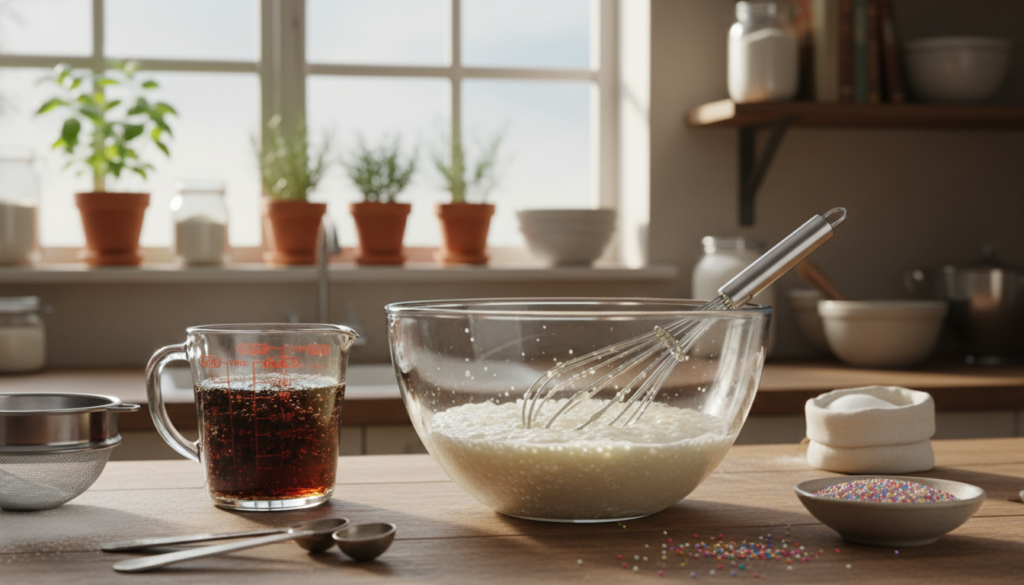
Use a large mixing bowl for this step. Pour the entire box of cake mix into your bowl. Add the full can of soda gradually while stirring.
Beat the mixture for two full minutes. You can use an electric mixer or whisk by hand. The batter will appear thinner than traditional cake batter.
You’ll notice tiny bubbles throughout the mixture. This indicates the carbonation is actively working. The airy quality helps create a light texture.
Baking Temperatures and Timing Tips
Always preheat your oven according to your cake mix box directions. Proper temperature is crucial for even baking. Prepare your pan with cooking spray or liners.
Work quickly when transferring your batter to the pan. This preserves the carbonation for optimal rise. Distribute the mixture evenly for consistent results.
| Pan Type | Approximate Baking Time | Toothpick Test |
|---|---|---|
| Standard Round (9-inch) | 25-30 minutes | Clean or few crumbs |
| Bundt Pan | 35-40 minutes | Clean insertion |
| Cupcake/Muffin | 18-22 minutes | Clean or moist crumbs |
| Sheet Pan (9×13) | 30-35 minutes | Clean center |
Follow the timing guidelines on your cake mix box. These are calibrated for optimal results. The toothpick test remains the best doneness indicator.
After baking, let your creation cool in the pan for 10-15 minutes. This allows the delicate structure to set properly. Then transfer to a cooling rack before decorating.
Flavor Combinations and Pan Options for Perfect Soda Cakes
The true magic of this simple recipe unfolds when you explore creative flavor pairings and smart pan choices.
These decisions transform your basic ingredients into something truly special.
Creative Soda and Cake Mix Pairings for Unique Tastes
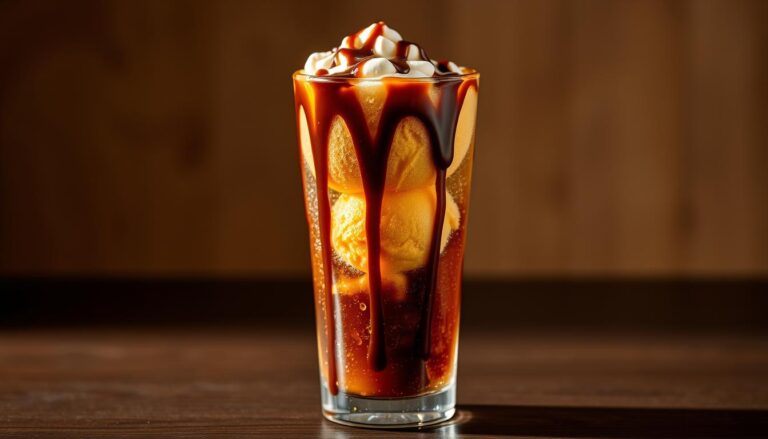
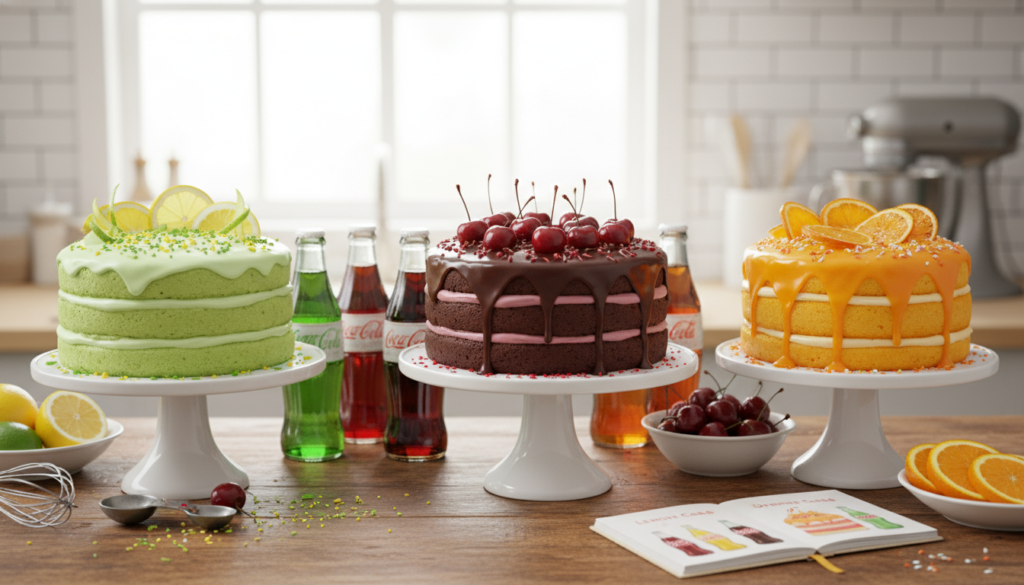
Classic combinations create memorable desserts. Vanilla cake mix with root beer delivers that nostalgic root beer float taste. Chocolate cake with cola makes a rich, popular treat.
For lighter options, try lemon cake with lemon-lime soda. Spice cake with ginger ale creates a warm, aromatic dessert. The soda flavor shines brightest with vanilla or yellow cake mixes.
Chocolate cake provides a stronger base that makes soda taste more subtle.
Don’t hesitate to experiment with specialty sodas like Rocky Mountain Root Beer with German chocolate cake mix.
If you prefer neutral carbonation, club soda or sparkling water works beautifully. This lets your cake mix flavor take center stage while benefiting from the leavening action.
Choosing the Right Pan: Cupcake, Bundt, or Round?
Your pan selection significantly impacts both structure and presentation. Cupcake pans are the clear winner for best results.
Individual cupcakes hold together exceptionally well despite the lack of eggs. They’re ideal for decorated presentations and portable portions.
Round or rectangular pans can work, but plan to serve directly from the pan. The delicate crumb makes flipping these cakes challenging.
Bundt pans often cause problems. The cake may rise then collapse, creating uneven surfaces and messy slices.
For decorator-friendly results, stick with cupcake pans or simple techniques for larger pans.
Stress-free Baking
The path to stress-free baking success leads here, where basic pantry staples transform into celebration-worthy treats.
You’ve mastered how two simple ingredients create impressive desserts. These recipes prove elaborate methods aren’t always necessary for delicious results.
Your creative adventures can take countless directions with different flavor combinations. Remember to let your creation cool completely before adding frosting.
This ensures the delicate structure supports your beautiful finish perfectly.
These versatile desserts work for any occasion, from birthdays to casual dinners.
The minimal ingredients make them economical without sacrificing quality. Keep experimenting with new flavors and approaches.
Each attempt reveals more possibilities while developing your personal baking style.